The Community
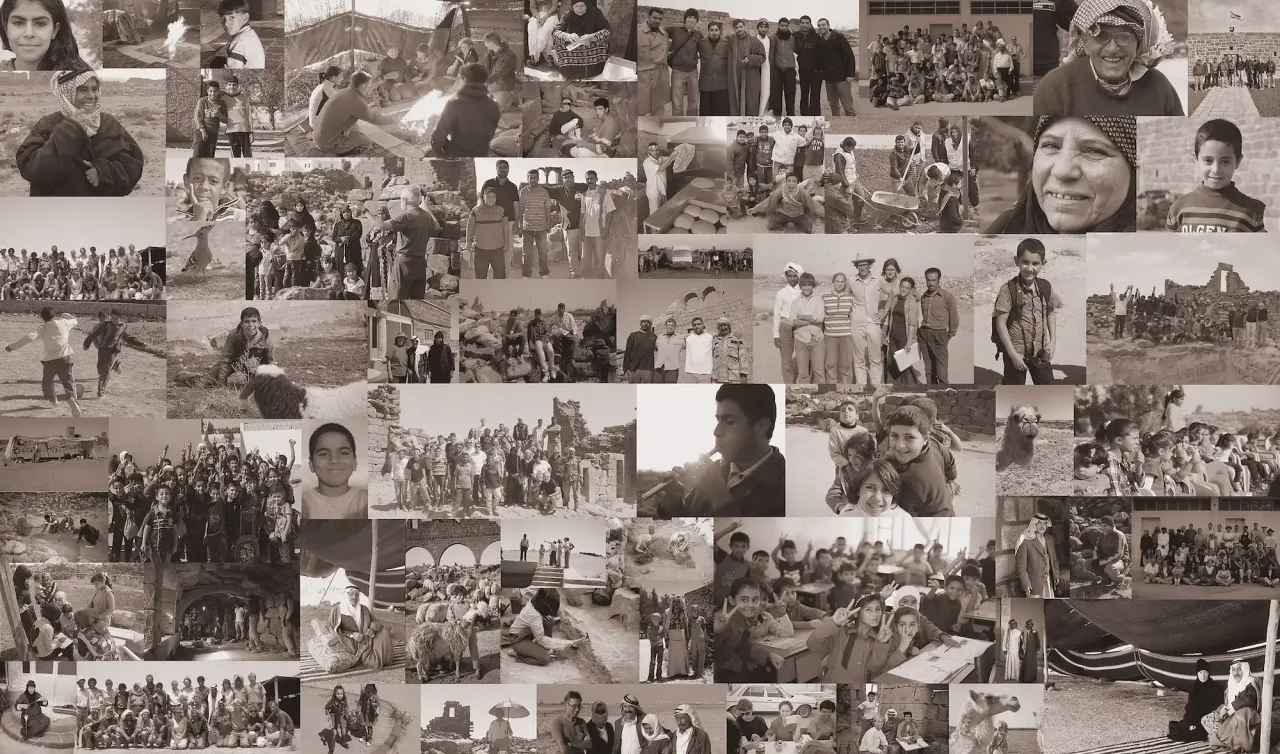
Over the past century, a thriving modern community has sprung up around Umm Al-Jimāl's long-dormant ruins—and two generations of residents have made valuable contributions to their preservation and study. Our latest research and work at Umm Al-Jimāl focus on its current people and history, largely from the perspectives of its community members and leaders. These pages aim to share this vibrant community's perspectives and culture, understand its ties to the historic site it surrounds, and provide updates on our community-based partnerships to develop a cultural heritage center and restore Umm Al-Jimāl's ancient water system.
The 19th & Early 20th Century
In the late 19th century, the Druze, a largely Arab people with their own unique history, beliefs, and traditions—based in part on Islam—were living mainly in Lebanon and Syria. However, in the 1800s, social and political upheaval in Ottoman Lebanon promoted a move east and south, to Syria and northern Jordan. Along the way, Druze often allied with local Arab Bedouin tribes, who herded their livestock. By the early 20th century, the Druze settled around Umm Al-Jimāl, remaining until the mid-1930s, when the formal border between Jordan and Syria was demarcated. During this period, families reused or reconstructed (usually arches and roofs) parts of some buildings on the site.
The Mas'eid
Arab Bedouin had used the site as a camping ground or temporary shelter throughout the centuries; however, in the late 1930s, a large Arab tribe, the Mas’eid, settled in the area and made the antiquities part of their community. The Mas’eid reused the buildings and pitched their tents among the ruins. For a time, schools were even held among the Byzantine buildings. After the government prohibited such use of the antiquities, the Mas’eid constructed the modern village that now surrounds the ancient site. The Department of Antiquities fenced off the ruins in 1972. The modern village has continued to grow since the 1950’s, and now constitutes a community of 4,000 with its own well-run municipal government.
Lintel Graffiti
During the early 20th century, it became a tradition for occupants of Umm Al-Jimāl’s ruins to record their family names on the large lintel stones over the doorways of buildings they used as homes, for storage, and as enclosures for their animals. Written or scratched into the basalt in Arabic, the names created distinct spaces for families living within the ancient site, much as modern neighbors might. In this way, the names served as signifiers of “ownership” or an informal claim to the property, as well as possibly a means to find other community members. Oral history interviews from Umm Al-Jimāl confirm that for many decades, local residents largely defined property rights within the ruins in this manner.
Tent Sites
Umm Al-Jimāl was known as a camping and watering site for Bedouin tribes since at least the 19th century, but became a more permanent home for the Mas’eid clan following the Druze’s withdrawal from the region in the mid-1930s. Some families settled among the standing ruins, though not always permanently, and maintained traditional ways of life by pitching their tents in and around the basalt buildings. While the tents remained the living quarters, buildings were used for storage and housing animals. Oral history traditions, combined with archaeological research, suggest this practice continued into the 1960s, when the Hashemite government began encouraging settlement among Bedouins throughout Jordan.
More about the Community of Umm Al-Jimāl
INSERT links/product cards to the following additional pages:
- Hauran Culture - Learn about the rich cultural heritage and traditions in the Hauran region of Southern Syria and Northern Jordan
- Oral Histories - Hear stories from residents, youths and elders, about their personal connection to the site and Hauran culture
- The Water Project - Find out more about a recent venture to refurbish the site's ancient water system to serve its modern residents
- Educational Curriculum - Explore the English and Arabic editions of the Education Manual, developed alongside the Ministry of Education