
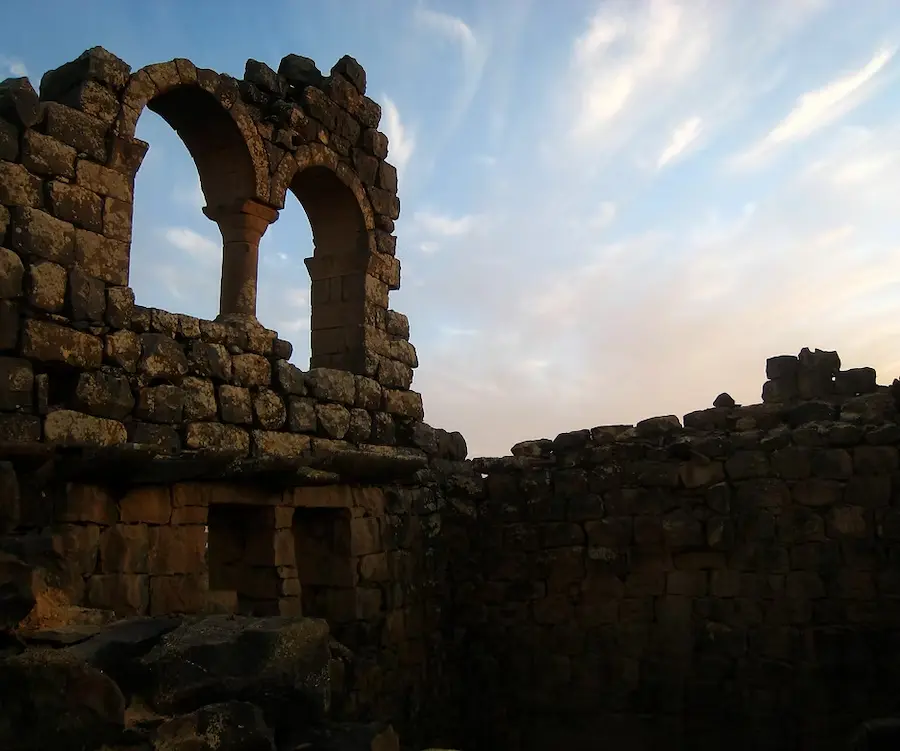
The Site
Umm Al-Jimāl is the largest and best-preserved ancient non-urban site in the basaltic Hauran region of northern Jordan and southern Syria. The site is about 90km north of Jordan’s capital, Amman, and 6km from the Syrian border.
Material culture, epigraphy, and regional evidence all point to the beginning of settlement in the late 1st century CE. The site was occupied until the 8th century CE, after which it saw only seasonal visitation and short-term occupation.
The spectacular ruins still standing today are primarily from the Late Antique period (c. 500–700), built by local people in the Hauran's traditional style.
UNESCO World Heritage Site
In July 2024, Umm Al-Jimāl became the latest Jordanian property to be inscribed on the UNESCO World Heritage List. The Umm Al-Jimāl Archaeological Project (UJAP) is pleased to have prepared the nomination dossier under the oversight of the Department of Antiquities of Jordan, thanks to the invaluable contributions of many local and regional stakeholders over the years.
Visit Umm A-Jimāl's page on the UNESCO website to read the nomination file and site management plan, and explore photos and videos of the site.
More about Ancient Umm Al-Jimal
Include links or product cards here for the following sub-pages:
- Historical Overview - Explore the historical, political, and economic history of the site
- Ancient People - Learn more about the people who lived in Umm Al-Jimāl in ancient times
- Habitat & Climate - Find out more about the environment, flora, and fauna around the site
- Ancient Architecture - Explore key techniques and features of Hauranian construction
- Religion & Society - Learn about religions at the site and their development over time